
Tuesday, July 23, 2019

Tuesday, June 25, 2019
WHY DOGS LIVE LESS THAN HUMANS

Copied from Facebook post on June 25, 2019:
Bill Overton
WHY DOGS LIVE LESS THAN HUMANS
Here's the surprising answer of a 6 year old child.
Being a veterinarian, I had been called to examine a ten-year-old Irish Wolfhound named Belker. The dog’s owners, Ron, his wife Lisa, and their little boy Shane, were all very attached to Belker, and they were hoping for a miracle.
I examined Belker and found he was dying of cancer. I told the family we couldn’t do anything for Belker, and offered to perform the euthanasia procedure for the old dog in their home.
As we made arrangements, Ron and Lisa told me they thought it would be good for six-year-old Shane to observe the procedure. They felt as though Shane might learn something from the experience.
The next day, I felt the familiar catch in my throat as Belker‘s family surrounded him. Shane seemed so calm, petting the old dog for the last time, that I wondered if he understood what was going on. Within a few minutes, Belker slipped peacefully away.
The little boy seemed to accept Belker’s transition without any difficulty or confusion. We sat together for a while after Belker’s Death, wondering aloud about the sad fact that dogs' lives are shorter than human lives. Shane, who had been listening quietly, piped up, ”I know why.”
Startled, we all turned to him. What came out of his mouth next stunned me. I’d never heard a more comforting explanation. It has changed the way I try and live.
He said, ”People are born so that they can learn how to live a good life — like loving everybody all the time and being nice, right?” The six-year-old continued,
”Well, dogs already know how to do that, so they don’t have to stay for as long as we do.”
Live simply.
Love generously.
Care deeply.
Speak kindly.
Love generously.
Care deeply.
Speak kindly.
Remember, if a dog was the teacher you would learn things like:
• When your loved ones come home, always run to greet them.
• Never pass up the opportunity to go for a joyride.
• Allow the experience of fresh air and the wind in your face to be pure Ecstasy.
• Take naps.
• Stretch before rising.
• Run, romp, and play daily.
• Thrive on attention and let people touch you.
• Avoid biting when a simple growl will do.
• On warm days, stop to lie on your back on the grass.
• On hot days, drink lots of water and lie under a shady tree.
• When you’re happy, dance around and wag your entire body.
• Delight in the simple joy of a long walk.
• Be faithful.
• Never pretend to be something you’re not.
• If what you want lies buried, dig until you find it.
• When someone is having a bad day, be silent, sit close by, and nuzzle them gently.
• Never pass up the opportunity to go for a joyride.
• Allow the experience of fresh air and the wind in your face to be pure Ecstasy.
• Take naps.
• Stretch before rising.
• Run, romp, and play daily.
• Thrive on attention and let people touch you.
• Avoid biting when a simple growl will do.
• On warm days, stop to lie on your back on the grass.
• On hot days, drink lots of water and lie under a shady tree.
• When you’re happy, dance around and wag your entire body.
• Delight in the simple joy of a long walk.
• Be faithful.
• Never pretend to be something you’re not.
• If what you want lies buried, dig until you find it.
• When someone is having a bad day, be silent, sit close by, and nuzzle them gently.
That's the secret of happiness that we can learn from a good dog.
Wednesday, June 5, 2019
How a Tick Bite Can Give You a Red Meat Allergy
Scientists think that lone star ticks can induce an allergy to red meat. Here's how to protect yourself.
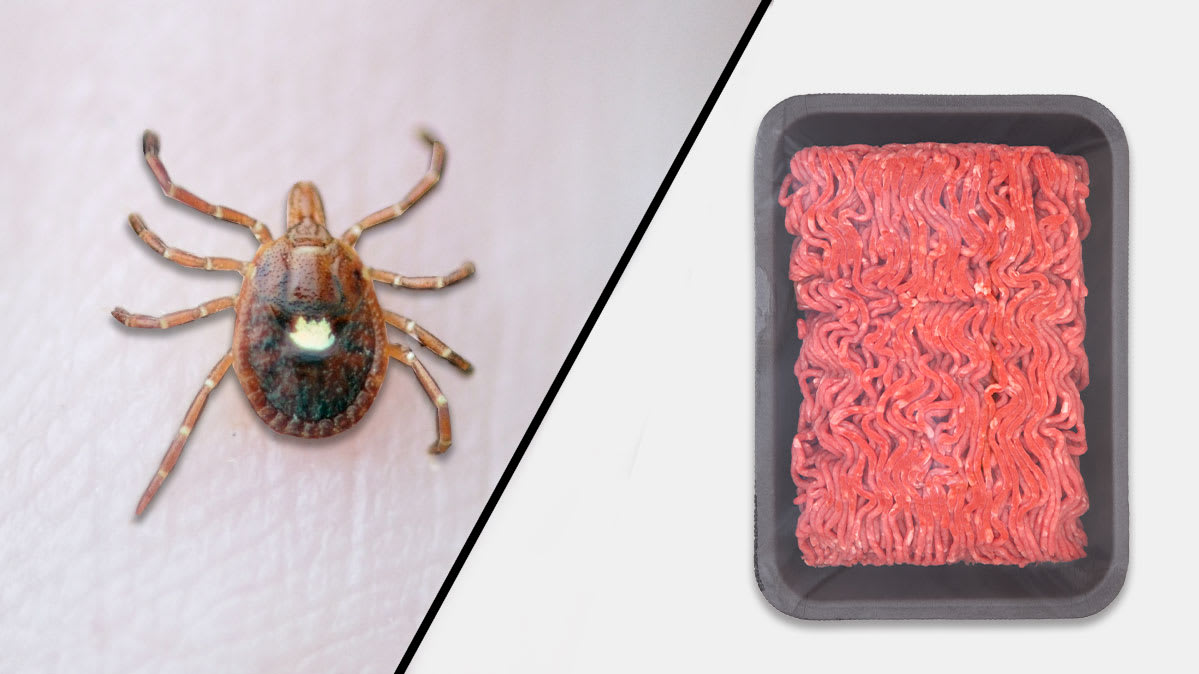
Most of us worry about Lyme disease or Rocky Mountain spotted fever when getting a tick bite. But different species of ticks can transmit a variety of diseases—and at least one very unusual ailment, scientists have learned: an allergy to red meat.
A growing body of evidence shows that the lone star tick—most prevalent in the southeastern U.S.—could be the cause of an allergy to a carbohydrate known as alpha-gal, which is found in red meat.
Scientists aren’t sure just how common this allergy is. But lone star ticks are spreading—their habitat now extends from the Southeast almost all the way to the Canadian border—which means more people may encounter them. Scientists who study the alpha-gal allergy estimated back in 2013 that more than 5,000 people in the Southeast U.S. alone could have the allergy.
A 2018 study in the Annals of Allergy, Asthma & Immunology suggests that a meat allergy caused by ticks may be more common than previously known, and could explain some previously unexplained cases of severe allergic reactions.
Here’s what you need to know about this allergy.
What Recent Research Reveals
Initially, scientists connected the dots between lone star ticks and meat allergies because of overlap between the geographic areas where the tick and the allergy were most common, according to an analysis published earlier this year in Annals of Allergy, Asthma & Immunology. Other studies showed that people who had the allergy tended to have a history of being bitten by ticks, or worked in jobs where they were likely to be exposed to ticks.
And in two recent cases reported in The Journal of Allergy and Clinical Immunology: In Practice, people who had an allergic reaction to red meat developed hives around the area where they had been previously bitten by a tick.
The 2018 study looked at just one allergy clinic in Tennessee, and found that in cases where they were able to pinpoint the cause, the alpha-gal allergy was behind about a third of anaphylaxis (severe allergic reaction) cases seen there between 2006 and 2016. That’s more than were caused by food allergies to peanuts, shellfish, or others, the researchers found.
Study author Jay Lieberman, M.D., associate professor at the University of Tennessee Health Science Center and vice chair of the American College of Allergy, Asthma and Immunology Food Allergy Committee, is quick to point out that these results do not mean that a third of severe allergic reactions nationwide are due to the effects of lone star tick bites, or that alpha gal is the number one cause of anaphylaxis in the country.
But Lieberman says the clinic has performed similar analyses in previous years, before the alpha-gal red meat allergy was discovered. In those earlier studies, doctors weren’t able to determine a cause for a greater percentage of anaphylaxis cases.
The newer study suggests that a significant number of those earlier cases with an unknown cause may actually have been due to this recently discovered allergy.
Understanding Meat Allergies
It’s not entirely clear to scientists why a bite from a tick could cause a person to develop an allergy to red meat, Lieberman says, or how common such an allergy is. And it doesn’t happen to everybody who’s bitten.Only some people who’ve been bitten by lone star ticks will develop the antibodies that indicate a possible allergy to alpha-gal, a substance in red meat. Of the people who do develop those antibodies, Lieberman says, some won’t ever show symptoms of an allergic reaction to red meat.
There’s also an intriguing difference between the alpha-gal red meat allergy and every other type of food allergy. Typically, allergic reactions to food occur immediately after exposure, within a few minutes. With an alpha-gal allergy, however, a reaction typically doesn’t start until several hours after eating red meat—which can make it challenging to pinpoint the culprit.
Researchers first linked tick bites to red meat allergies almost a decade ago. But there are still a lot of questions left to answer about why some people develop the allergy and some don’t, how many people have been affected, and why the reaction to red meat is delayed, rather than immediate.
Consumer Reports, by Catherine Roberts, last updated: May 09, 2019
Most of us worry about Lyme disease or Rocky Mountain spotted fever when getting a tick bite. But different species of ticks can transmit a variety of diseases—and at least one very unusual ailment, scientists have learned: an allergy to red meat.
A growing body of evidence shows that the lone star tick—most prevalent in the southeastern U.S.—could be the cause of an allergy to a carbohydrate known as alpha-gal, which is found in red meat.
Scientists aren’t sure just how common this allergy is. But lone star ticks are spreading—their habitat now extends from the Southeast almost all the way to the Canadian border—which means more people may encounter them. Scientists who study the alpha-gal allergy estimated back in 2013 that more than 5,000 people in the Southeast U.S. alone could have the allergy.
A 2018 study in the Annals of Allergy, Asthma & Immunology suggests that a meat allergy caused by ticks may be more common than previously known, and could explain some previously unexplained cases of severe allergic reactions.
Here’s what you need to know about this allergy.
What Recent Research Reveals
Initially, scientists connected the dots between lone star ticks and meat allergies because of overlap between the geographic areas where the tick and the allergy were most common, according to an analysis published earlier this year in Annals of Allergy, Asthma & Immunology. Other studies showed that people who had the allergy tended to have a history of being bitten by ticks, or worked in jobs where they were likely to be exposed to ticks.
And in two recent cases reported in The Journal of Allergy and Clinical Immunology: In Practice, people who had an allergic reaction to red meat developed hives around the area where they had been previously bitten by a tick.
The 2018 study looked at just one allergy clinic in Tennessee, and found that in cases where they were able to pinpoint the cause, the alpha-gal allergy was behind about a third of anaphylaxis (severe allergic reaction) cases seen there between 2006 and 2016. That’s more than were caused by food allergies to peanuts, shellfish, or others, the researchers found.
Study author Jay Lieberman, M.D., associate professor at the University of Tennessee Health Science Center and vice chair of the American College of Allergy, Asthma and Immunology Food Allergy Committee, is quick to point out that these results do not mean that a third of severe allergic reactions nationwide are due to the effects of lone star tick bites, or that alpha gal is the number one cause of anaphylaxis in the country.
But Lieberman says the clinic has performed similar analyses in previous years, before the alpha-gal red meat allergy was discovered. In those earlier studies, doctors weren’t able to determine a cause for a greater percentage of anaphylaxis cases.
The newer study suggests that a significant number of those earlier cases with an unknown cause may actually have been due to this recently discovered allergy.
Understanding Meat Allergies
It’s not entirely clear to scientists why a bite from a tick could cause a person to develop an allergy to red meat, Lieberman says, or how common such an allergy is. And it doesn’t happen to everybody who’s bitten.Only some people who’ve been bitten by lone star ticks will develop the antibodies that indicate a possible allergy to alpha-gal, a substance in red meat. Of the people who do develop those antibodies, Lieberman says, some won’t ever show symptoms of an allergic reaction to red meat.
There’s also an intriguing difference between the alpha-gal red meat allergy and every other type of food allergy. Typically, allergic reactions to food occur immediately after exposure, within a few minutes. With an alpha-gal allergy, however, a reaction typically doesn’t start until several hours after eating red meat—which can make it challenging to pinpoint the culprit.
Researchers first linked tick bites to red meat allergies almost a decade ago. But there are still a lot of questions left to answer about why some people develop the allergy and some don’t, how many people have been affected, and why the reaction to red meat is delayed, rather than immediate.
What to Watch For
Early signs of anaphylaxis may include a metallic taste, burning, tingling, or itching of the tongue or mouth, headache, and feelings of fear or confusion. A reaction can progress quickly, and severe symptoms include throat swelling, difficulty breathing, vomiting, diarrhea, and more.
If you think you may be experiencing anaphylaxis, even if you’ve never had an allergic reaction before, you should call 911. (If you know you have an allergy to food, and you experience symptoms of anaphylaxis, especially trouble breathing, wheezing, or throat swelling, you should use an epinephrine auto-injector if you have one.)
When the reaction is under control, talk to your doctor about whether red meat could have been the cause of your symptoms, since some doctors may not be aware of the alpha-gal allergy, suggests Princess Ogbogu, M.D., division director of allergy and immunology at The Ohio State University Wexner Medical Center.
There’s no cure for red meat allergy, so if you’re diagnosed, you’ll need to avoid the foods that trigger a reaction. Commonly, that includes various kinds of red meats. But some people can also become sensitive to other items that contain alpha-gal, including dairy, and even, rarely, sweets that contain gelatin or medications derived from animal byproducts.
In some cases, Lieberman says, if people who’ve developed alpha- gal allergies avoid all future tick bites from lone star ticks (or the varieties that cause the allergy in other countries), their levels of the antibodies to alpha-gal may diminish, and the allergy could subside. It’s unknown how common this is, however.
About the Lone Star Tick
Lone star ticks, so named for the white splotch on the backs of adult females, are most common in southern and eastern states. Like other ticks, however, their geographic distribution is expanding, according to Ellen Stromdahl, a retired entomologist from the tickborne disease laboratory of the U.S. Army Public Health Center in Aberdeen Proving Ground, Md.
Lone star ticks don’t cause Lyme disease, as a recent analysis that Stromdahl conducted shows. But along with spreading the alpha-gal allergy, they can also transmit the bacteria that cause another disease called ehrlichiosis. Ehrlichiosis can cause fever, muscle pain, nausea, vomiting, and, rarely, rash. It’s fatal in about 1.8 percent of cases, according to the Centers for Disease Control and Prevention, although it can be treated with antibiotics.
A lone star tick is much less likely to carry ehrlichiosis than a blacklegged tick is likely to carry Lyme disease, notes Stromdahl. But lone star ticks are much more aggressive than other common types of ticks in the U.S. “You’re more likely to be mobbed by lone star ticks,” she says, and finding multiple bites is common if you’ve been in their habitat.
Protect Yourself From Ticks
As with any tick bite, it’s important not to panic if you discover one, Lieberman says. “The vast majority in this country and elsewhere who get bitten by ticks don’t develop alpha-gal allergy,” he says.
Still, you can take reasonable precautions to protect yourself from ticks and the diseases—or allergies—they can cause. Here’s what to do:
Wear an effective bug spray if you’re going to be in an area where ticks are common. Lone star and other types of ticks prefer wooded areas, brush, and long grass. Consumer Reports’ insect repellent testing has found that products containing 25 to 30 percent deet provide the most reliable protection. (Check out our top-rated repellents.)
Dress carefully. Wear long pants and long sleeves, and tuck your pants into your socks. Wearing clothing commercially treated with the pesticide permethrin, or treating your clothes and gear with permethrin yourself, is also a good option for additional protection.
Check yourself for ticks at the end of every day you’ve been out in their territory. Taking a shower soon after you come in is a good opportunity to wash away any ticks that may be crawling on your skin without having yet bitten you, and to carefully look for any that have attached. If you find them on you, remove them properly.
Be careful with the clothes you were wearing in tick habitats, Stromdahl recommends. Run them through a cycle in a hot dryer to kill any ticks that may be clinging on, and leave your shoes outside in the sun.
Early signs of anaphylaxis may include a metallic taste, burning, tingling, or itching of the tongue or mouth, headache, and feelings of fear or confusion. A reaction can progress quickly, and severe symptoms include throat swelling, difficulty breathing, vomiting, diarrhea, and more.
If you think you may be experiencing anaphylaxis, even if you’ve never had an allergic reaction before, you should call 911. (If you know you have an allergy to food, and you experience symptoms of anaphylaxis, especially trouble breathing, wheezing, or throat swelling, you should use an epinephrine auto-injector if you have one.)
When the reaction is under control, talk to your doctor about whether red meat could have been the cause of your symptoms, since some doctors may not be aware of the alpha-gal allergy, suggests Princess Ogbogu, M.D., division director of allergy and immunology at The Ohio State University Wexner Medical Center.
There’s no cure for red meat allergy, so if you’re diagnosed, you’ll need to avoid the foods that trigger a reaction. Commonly, that includes various kinds of red meats. But some people can also become sensitive to other items that contain alpha-gal, including dairy, and even, rarely, sweets that contain gelatin or medications derived from animal byproducts.
In some cases, Lieberman says, if people who’ve developed alpha- gal allergies avoid all future tick bites from lone star ticks (or the varieties that cause the allergy in other countries), their levels of the antibodies to alpha-gal may diminish, and the allergy could subside. It’s unknown how common this is, however.
About the Lone Star Tick
Lone star ticks, so named for the white splotch on the backs of adult females, are most common in southern and eastern states. Like other ticks, however, their geographic distribution is expanding, according to Ellen Stromdahl, a retired entomologist from the tickborne disease laboratory of the U.S. Army Public Health Center in Aberdeen Proving Ground, Md.
Lone star ticks don’t cause Lyme disease, as a recent analysis that Stromdahl conducted shows. But along with spreading the alpha-gal allergy, they can also transmit the bacteria that cause another disease called ehrlichiosis. Ehrlichiosis can cause fever, muscle pain, nausea, vomiting, and, rarely, rash. It’s fatal in about 1.8 percent of cases, according to the Centers for Disease Control and Prevention, although it can be treated with antibiotics.
A lone star tick is much less likely to carry ehrlichiosis than a blacklegged tick is likely to carry Lyme disease, notes Stromdahl. But lone star ticks are much more aggressive than other common types of ticks in the U.S. “You’re more likely to be mobbed by lone star ticks,” she says, and finding multiple bites is common if you’ve been in their habitat.
Protect Yourself From Ticks
As with any tick bite, it’s important not to panic if you discover one, Lieberman says. “The vast majority in this country and elsewhere who get bitten by ticks don’t develop alpha-gal allergy,” he says.
Still, you can take reasonable precautions to protect yourself from ticks and the diseases—or allergies—they can cause. Here’s what to do:
Wear an effective bug spray if you’re going to be in an area where ticks are common. Lone star and other types of ticks prefer wooded areas, brush, and long grass. Consumer Reports’ insect repellent testing has found that products containing 25 to 30 percent deet provide the most reliable protection. (Check out our top-rated repellents.)
Dress carefully. Wear long pants and long sleeves, and tuck your pants into your socks. Wearing clothing commercially treated with the pesticide permethrin, or treating your clothes and gear with permethrin yourself, is also a good option for additional protection.
Check yourself for ticks at the end of every day you’ve been out in their territory. Taking a shower soon after you come in is a good opportunity to wash away any ticks that may be crawling on your skin without having yet bitten you, and to carefully look for any that have attached. If you find them on you, remove them properly.
Be careful with the clothes you were wearing in tick habitats, Stromdahl recommends. Run them through a cycle in a hot dryer to kill any ticks that may be clinging on, and leave your shoes outside in the sun.
Friday, May 10, 2019
Be careful of ticks...

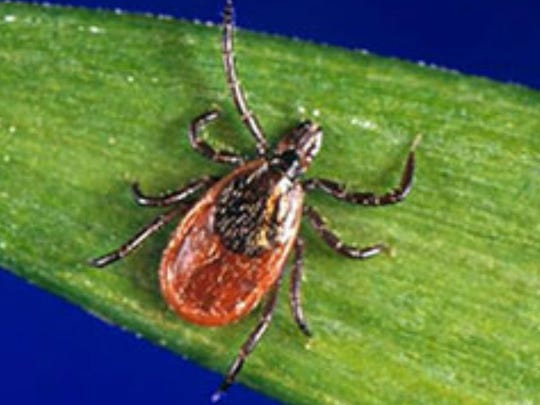
Boy was my mama scared when she saw this on my face so close to my tear duct. She tried to remove it but it wouldn't budge! She and Dad were not certain it was a tick until they took me to the vet. As soon as the vet removed it you could clearly identify it as a disgusting tick. Yuck! Now I am getting extra cheese (which makes me happy) to hide the antibiotic pills that I have to swallow for two weeks. The vet was glad to hear that Mama started my K9 Advantix in April and I am up-to-date with my vaccines.
Mamma has to investigate bug repellent because this is a serious tick season due to the warm winter and wet spring last year (according to researchers at Rutgers). Thank goodness the vet said we should continue to go on our hikes, we just have to spend extra time protecting ourselves.
It is a jungle out there...be extra careful canines and humans. Enjoy Spring!
Woof, woof, till later,
Zoey
Mild winter, wet 2018 may cause surge in ticks in NJ, Northeast
 |
https://www.northjersey.com/story/news/environment/2019/03/14/nj-weather-warm-winter-may-prompt-more-ticks-spring/3131637002/
Tips on avoiding a tick bite
1. Keep grass short and underbrush thinned at your home.
2. Apply EPA-registered insect repellent on your skin, clothing, boots and camping gear when outdoors to prevent ticks from getting on your body.
3. Wear light-colored clothes to help you spot ticks easily.
4. Tuck pants into socks to keep ticks from getting under your clothes.
5. Check your body for ticks and shower within two hours of being outdoors.
6. If you find a tick, carefully remove it with fine-pointed tweezers. Grasp it by the mouth parts closest to the skin and pull it steadily outward. Do not use petroleum jelly, noxious chemicals or hot objects. The sooner the tick is removed, the less likely it is to transmit disease.
Below is some information about human repellent reprinted from Consumer Reports. Please click on the link if you are interested in reading the entire article by Jeneen Interlandi, last updated on April 24, 2019.
https://www.consumerreports.org/insect-repellent/how-safe-is-deet-insect-repellent-safety/
How Safe Is Deet?
Despite assurances about the chemical, consumer concerns persist. Is there a reason to worry?
Deet is the most widely used insect repellent in the U.S. It has been around longer than any other active ingredient, and many scientists say it’s the gold standard for all repellents.
Consumer Reports' testing has consistently ranked deet-based products among the top performers, and our experts agree with the broad scientific consensus that the chemical is safe and effective when used as directed.
If you’re worried—or just wondering about—the potential downsides of choosing a deet-based repellent, you're not alone. A 2018 Consumer Reports nationally representative survey of 2,052 adults found that 25 percent of Americans said they avoid using insect repellents with deet. And about a third said they thought repellents containing deet are not as safe as those that don't have the chemical.
What Exactly Is Deet?
Deet (known to chemists as N,N-Diethyl-meta-toluamide) is a yellowish liquid that, when applied to skin or clothing, repels a number of biting insects, including mosquitoes, ticks, and fleas. The chemical was created by USDA chemists in the 1940s for use by the U.S. military. It has been commercially available since 1957 and has since become commonplace.
One long-held theory is that deet blocks an insect’s ability to smell human sweat and breath. More recent research suggests a different, simpler explanation: The compound just smells incredibly bad to most bugs, so much so that they avoid all contact with it.
The balance of evidence indicates that deet is safe when used as directed. There are a few things to keep in mind when considering reports to the contrary:
1. The overall incidence of deet poisoning is very low. In 1998 the Environmental Protection Agency conducted a definitive assessment of the chemical. The agency turned up 46 seizures and four deaths that were potentially linked to deet exposure. It estimated that since 1960, the incidence of seizures with a potential link to deet exposure was one per 100 million uses.
2. Most of those reported cases involved a misuse of deet products.Ingestion or “dermal application not consistent with label instructions” was the most common source of potential deet toxicity, according to the EPA report. The agency concluded that when consumers followed product-label instructions and took reasonable precautions, the health risks of deet essentially vanished.
3. A vast majority of cases of deet toxicity are mild. In another seminal analysis, researchers looked at more than 9,000 calls made to poison control centers between 1985 and 1989. They found that nearly 90 percent of the injuries were treated at home, and that of those people referred to health centers, 80 percent were discharged after an examination. A second analysis of more than 20,000 calls made between 1993 and 1997 found similar results.
4. There is no reliable evidence that deet causes cancer. Neither the Department of Health and Human Services nor the EPA's Office of Pesticide Programs has classified deet as a carcinogen. According to the Centers for Disease Control and Prevention, animal studies have not found an increase in tumors in research subjects who were given oral deet tablets or who had liquid deet applied to their skin. A Swedish study did find that men who used insect repellent for 115 days or longer faced an increased risk of developing testicular cancer. (A majority of repellents contained deet at the time of the study.) But the CDC says that the study was flawed and that the results were not conclusive.
4. There is no reliable evidence that deet causes cancer. Neither the Department of Health and Human Services nor the EPA's Office of Pesticide Programs has classified deet as a carcinogen. According to the Centers for Disease Control and Prevention, animal studies have not found an increase in tumors in research subjects who were given oral deet tablets or who had liquid deet applied to their skin. A Swedish study did find that men who used insect repellent for 115 days or longer faced an increased risk of developing testicular cancer. (A majority of repellents contained deet at the time of the study.) But the CDC says that the study was flawed and that the results were not conclusive.
Find more information regarding risk for the environment, children, and pregnant women. Also tips for safe use by clicking on the link above.
Alternatives to Deet
If you still can’t bear to put deet on your skin (some people say it smells terrible, others that they will never trust the chemical no matter what anyone tells them), there are other effective repellents to consider:
Picaridin--Picaridin is a repellent that was modeled after a molecule found in pepper plants. It has been on the U.S. market since 2005 and has done well in Consumer Reports’ tests. Specifically, spray products with at least 20 percent picaridin have worked as well or better than some deet-based ones. Not as much research has been done on picaridin as on deet. But the data that does exist indicate that the chemical is safe, and the World Health Organization and the CDC recommend picaridin.
Oil of Lemon Eucalyptus (OLE)--Oil of lemon eucalyptus is another active ingredient that’s done well in CR's tests (especially at concentrations of 30 percent). OLE is registered with the EPA as a biopesticide, meaning that products containing this ingredient are subject to at least some testing for safety and efficacy. To be sure, the requirements for biopesticides are more lax than they are for synthetic products like deet and picaridin: OLE is not recommended for children younger than 3. But for everyone else, when used as directed, our experts agree with the CDC and EPA that it's safe and works well.
Thursday, March 21, 2019
All are welcome to the 32nd Annual Liturgy for Parents Whose Children Have Died

The annual mass is a beautiful way of remembering our children who no longer live on this planet. It doesn't matter how old your child(ren) was or how he/she died, or how long ago. If you are interested in attending, please RSVP and add your child's name to the list of names that will be read during the Liturgy. Peace & blessings to all who are grieving the loss of a child.
Thursday, March 7, 2019
Someone thinks she is a lap dog...

Who said a 60 plus pound dog can't be a comfy, cozy lap dog?

Woof, woof till later,
Zoey
A NO NO
This is how children get bit and dogs pay the price.
Don't let children do this to dogs.

Picture copied from Facebook.
Woof, woof till later,
Zoey
Subscribe to:
Posts (Atom)