Zoey has really taken to blogging. She asked me to help her create a blog just for and about her and other canines. She says she wants to spotlight dogs like her. So there is no time like the present to start the New Year off with www.Zoeytherescue.blogspot.com


Zoey wants to remind you that there are tons of animals that need a FUREVER home. Also shelters need donations not only monetary but many other items too. She says to take in consideration that there are lots of humans who donate to wonderful, much-needed causes to help humans but there is not enough humans that donate to help save animals.


Disclaimer: All content provided on this blog is for informational/entertainment purposes only. I make no representations as to the accuracy or completeness of any information on this site or found by following any link.


Showing posts with label Cesar's Way. Show all posts

Thursday, February 8, 2018

Do you brush your dog's teeth?


7 tips for doggie dental care
The good news for dogs is they’re not as prone to cavities as human beings are. But despite the old conventional wisdom that a dog’s mouth is cleaner than a humans, dogs can still develop problems like tartar and plaque buildup and gingivitis. But it’s not just bad breath and yellow teeth you have to worry about. As with humans, these canine dental problems can actually lead to life-threatening infections and issues including heart, liver, and kidney disease.
Here’s how to practice good dog dental care that will extend your dog’s life:

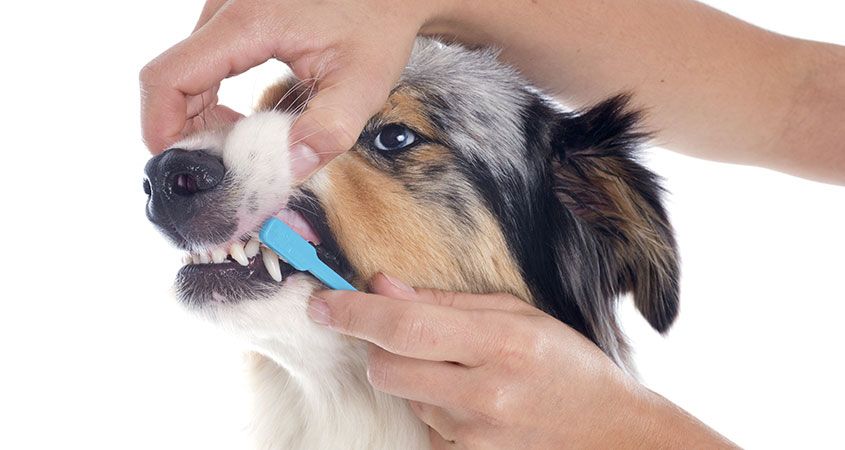
How to brush your dog’s teeth

If your dog can brush his own teeth, you can stop reading this article and start posting the video to YouTube. For the rest of us, we have to use a canine toothbrush and a little strategy. The best brush to use is double-headed with the brushes at a 45 degree angle to clean below the gumline, like those offered by companies like Petosan.
Your dog might not go for the tooth brushing at first, but hopefully, you can make it a reasonably pleasant experience for both of you. Try and choose a time when your dog has had a decent amount of exercise, so he’s more inclined to sit still for the procedure. Don’t overdo it the first few times. Start slowly and quit if your dog gets agitated, even if you don’t brush the whole mouth. You can increase the time every day as he gets used to it. Also, make sure to speak soothingly and pleasantly during the brushing and reward your dog with a treat afterwards. Before too long, your dog should start looking forward to the event.

Start early with your dog as a puppy!

Grown dogs can learn to become comfortable with dog teeth cleaning, but make things easier for yourself by working with your dog as a puppy.

How to pick the right tooth paste for your dog

This is very important. Do NOT use regular human toothpaste for your dog. Most human toothpastes include fluoride, which is extremely poisonous to dogs. You can find toothpaste formulated for dogs at most good pet stores.

Dry food is better than soft food

If the tooth brushing ends in blood, sweat, or tears, there are still choices you can make to help improve your dog’s oral health. Crunchy kibble is better for your dog’s teeth than soft food, as soft food is more likely to stick to the teeth and cause decay.

Chew bones and chew toys to clean teeth

There are many synthetic bones and chew toys that are specially designed to strengthen your dog’s gums and teeth. Just make sure you’re providing safe objects for your dog to chew on. Hard objects can cause broken teeth.
Giving your dog a good bone to chew on can help get rid of build up and keep teeth strong, but imagine a human who only chews gum and uses mouth rinse. That’s not an effective means of ensuring good dental hygiene and overall health. The same is true for your dog.

When to see a veterinarian

Whether you brush your dog’s teeth or not, you should have a look inside his mouth every week or so. If you notice any of these signs of dental problems, then take your dog to the vet:
  • Bad breath
  • Change in eating or dog chewing habits
  • Pawing at the face or mouth
  • Depression
  • Excessive drooling
  • Misaligned or missing teeth
  • Discolored, broken, missing or crooked teeth
  • Red, swollen, painful or bleeding gums
  • Yellowish-brown tartar crust along the gum line
  • Bumps or growths within the mouth

How often to see a vet?

Even with healthy teeth, just like you, your dog should have his teeth checked by a professional every six to twelve months. Your vet should include a dental examination with a normal checkup, but ask for it if they don’t.
Dental care can be a hassle for humans and dogs, but proper maintenance can be a money saver in the long run and even a lifesaver. Letting it go can lead to costly and often painful vet visits down the road. Many dogs have to be given anesthesia to have their teeth and gums cleaned if the buildup is bad enough. Keep your dog’s mouth clean though, and you’ll both be smiling!


Bye bye bad breath

There are many reasons why good dogs sometimes behave badly. You’ve seen many cases on Cesar Millan’s TV shows where bad behaviors in dogs were caused or triggered by human behavior.
Cesar has dealt with a lot of these cases, including severe aggression, fear, and dominance issues. But what you might not know is that bad behavior, or a sudden change in your dog’s behavior, can be caused by undetected medical problems. For example, if your dog starts chewing on random household objects, he may be experiencing tooth pain that could be helped with regular brushing.
Symptoms to watch for
If your dog suddenly becomes a compulsive chewer, there is a chance that something is wrong with her teeth or gums. The most frequent medical problem dogs have is dental disease, and it usually goes undetected. You should watch for the following symptoms:
  1. Bad breath
  2. Red or swollen gums
  3. Bleeding gums
  4. Sudden change in eating or chewing habits
  5. Pawing at the face or mouth
  6. Compulsive nose licking
Please consult your veterinarian if you see any these symptoms.
Prevention
Cesar prefers prevention over treatment and believes that, “The daily practice of good oral health can prevent problems down the road.”
Dental disease will develop if plaque is present and remains over time. Tooth brushing is the single most effective way to prevent dental disease. Dental treats and chewing aids may also help reduce plaque buildup, but they should be used as a complement, not a replacement, for the toothbrush.
Dental care routine
Dr. Rick Garcia, who is the veterinarian at Cesar Millan’s Dog Psychology Center, shares his tips for a good and stress-free dental care program with seven simple rules sure to provide your pooch with a good dental care routine:
  1. A brushing routine is important for dogs of all ages. It’s ideal when introduced during puppyhood.
  2. Establish brushing as part of a daily routine with your dog. Try to brush at the same time every day.
  3. The best time for brushing is after walking and feeding but right before bed, when your dog may be most relaxed.
  4. Inspect your dog’s mouth before brushing. Make sure the gums are pink and not bleeding, and look for broken or chipped teeth. If you spot any of these signs, take your dog to the vet for a checkup.
  5. Introduce the taste of toothpaste to your dog before you brush. The best way to do this is by applying a small amount of toothpaste to your index finger and allowing your dog to smell and taste it.
  6. At the Dog Psychology Center, Dr. Garcia uses a toothpaste designed for dog, with a dog-friendly flavor.
  7. After your dog has sniffed the toothpaste and is used to its taste, apply more toothpaste to your index finger and carefully touch the gums, so your dog gets used to the feeling. Then, gently rub the toothpaste along the gum line.
  8. Let your dog rinse at the water bowl when you'r through.
Remember, do not attempt to wipe all of the teeth in the first or second brushing. Dr. Garcia recommends increasing the number of teeth you wipe each day as the routine becomes more familiar
How to introduce the toothbrush to your dog
After you have introduced cleaning and toothpaste to your dog, it’s time to introduce the toothbrush.
Make sure your dog is calm and submissive. Cesar warns to never attempt this with an excited dog. “Tooth brushing can be a form of affection for your dog. Never let it be stressful. Just be patient.”
Here is a step-by-step approach to help you add the toothbrush to your dog’s dental care routine:
Step 1: Apply a small amount of toothpaste to the toothbrush.
Step 2: Let the dog lick it off.
Step 3: Start by brushing one tooth with a gentle back and forth motion.
Step 4: Gradually increase the number of teeth brushed by one tooth per day.
If you have any questions or encounter problems with this dental brushing routine, consult your local vet. Good dental care is important and it is often overlooked. Cesar Millan is emphatic in saying that a dog’s strongest sense is smell. Dental disease can adversely affect a dog’s sense of smell, which can lead to behavior problems, fatigue, and overall unhappiness. .
Editor's Note:  I think I will be getting a toothbrush and some flavor-full toothpaste. 

Woof, woof, till later, 
Zoey Elizabeth

Sunday, February 4, 2018

Cesar's 6 tips for mastering the dog walk


By Cesar Millan

https://www.cesarsway.com/dog-training/walking/6-tips-for-mastering-the-dog-walk?roi=echo2-13490884334-5737157-1896c97f61b77520b97ffc0253a0ee4e

Here are six dog training tips on how to walk your dog and master the dog walk. When I’m out with my dog pack, I often walk about ten dogs at a time, sometimes even off-leash if I'm in a safe area. People are amazed by this, but it's simple: the dogs see me as their pack leader. This is why dogs follow me wherever I go.

1. Walk in front of your dog. Walking in front of your dog allows you to be seen as the pack leader. Conversely, if your dog controls you on the walk, he’s the pack leader. You should be the first one out the door and the first one in. Your dog should be beside or behind you during the walk.

2. Use a short dog leash. This allows you to have more control. Attaching the leash to the very top of the neck can help you more easily communicate, guide, and correct your dog. If you need additional help, consider the Pack Leader Collar. Always keep your dog's safety in mind when giving corrections.

3. Give yourself enough time for the dog walk. Dogs, like humans, are diurnal, so taking walks in the morning is ideal. I recommend setting aside thirty minutes to a full hour. The specific needs of each dog differ. Consult your vet and keep an eye on your dog's behavior to see if his needs are being met.

4. How to reward your dog during the walk. After your dog has maintained the proper state of mind, reward him by allowing him to relieve himself and sniff around. Then you need to decide when reward time is over. It should always be less than the time spent focused on the walk.

5. Keep leading, even after the walk. When you get home, don't stop leading. Have your dog wait patiently while you put away his leash or take off your shoes.

6. Reward your dog after the walk. By providing a meal after the walk, you have allowed your dog to "work" for food and water.

And don’t forget to set a good example by always picking up after your dog!

Wednesday, August 23, 2017

Ten things you didn’t know about... pit bulls


Reprinted from Cesar's Way, August 23, 2017


Junior — and Daddy before him — has served as Cesar’s right paw dog and ambassador for this very misunderstood and maligned breed. Here are ten things you may not have known about pit bulls.
  1. Pit bulls are the only breed of dog to have appeared on the cover of LIFE magazine three times, and of course pit bulls — especially Daddy and Junior — were regularly featured on the cover of Cesar’s Way magazine over its five-year run. Other magazine depictions have not been as favorable, however...
     
  2. The negative change in attitude toward pit bulls began thirty years ago, with a Time magazine story called “The Pit Bull Friend and Killer,” which began with the premise that the breed is inherently dangerous and did its damage from there. Prior to pit bulls being considered the vicious breed du jour, Doberman pinschers, German shepherds, and Rottweilers had held that designation and were also subject to breed bans and breed specific legislation.
     
  3. Ironically, 1987 was the same year that Bud Light introduced its hugely popular mascot, Spuds MacKenzie, during Super Bowl XXI. The campaign was not killed because of the dog breed, however. Instead, it was because of pressure from special interest groups that perceived the dog as encouraging underage drinking. Spuds was retired in 1989, although she (yes, the dog playing him was female) made a return appearance as a ghost during Super Bowl LI in 2017.
     
  4. You may not recognize the name Armando Christian Pérez — or, as he says Lady Gaga calls him, “Armando, formando escándalo” (“Armando, creating a scandal”) — but you’ll probably recognize him by his stage name, Pitbull, which he adopted because of the breed’s tenacity, as well as its outlaw status in his native Dade County, Florida.
     
  5. Years before their reputation was tarnished beginning in the 1980s, pit bulls were not only considered safe with children, but they were often used as nanny dogs — and some of the most famous images of pit bulls from the 1920s and 1930s involve them with children, including as Petey in the “Our Gang” comedies and as Buster Brown’s sidekick Tige.
     
  6. Photographer Sophie Gamand created a series of portraits of pit bulls with flowers in order to help soften the breed’s reputation.
     
  7. Meanwhile, pit bulls Budgie and Basil front the grindcore band Caninus as vocalists, with a little human help from members of the group Most Precious Blood — which is not a reference to bloodhounds.
     
  8. There are many persistent myths about pit bulls. Some of the false ones are that they can lock their jaws, and that they bite much harder than other breeds. But the truth is that there’s nothing special about their jaws, and in a test against a German shepherd and a Rottweiler, the pit bull’s bite strength actually came in last place. (The winner in the animal kingdom is the Kodiak Bear, by the way, with a bite force nearly four times as strong as a pit bull’s.)
     
  9. One of the reasons that pit bulls get so much of the blame in the media for attacking people is that dogs are often misidentified as belonging to the breed when they don’t. In one study using animal shelter employees in Florida, the number of dogs misidentified by people as pit bulls when DNA said otherwise was inflated by 55%. Out of 120 dogs, only 25 actually were pits or part pit, but shelter staff identified 55 dogs that way. Remember, too, these are people who work with dogs all the time making the error. In the case of police or reporters making the call, it’s reasonable to expect them to be at least as inaccurate, if not more so.
     
  10. Cesar has always said that a dog sees itself as animal, species, breed, and then name, with the latter two fairly unimportant as far as the dog is concerned — and with breed having nothing to do with a pit bull’s temperament. While people still spread the rumor that pit bulls are inherently vicious, studies have shown that breed is actually not a factor in dog-bite related fatalities at all. Human error and their failings at training or socializing dogs, though, were the biggest factors.

Wednesday, July 26, 2017

Doing a disservice: The harm in service dog fraud

Photo by:  Piyoros C/Shutterstock.com
Reprinted from Cesar's Way /  www.cesarsway.com

You may have noticed the signs outside of businesses becoming more prominent lately. They all carry a similar message: Only legitimate service dogs allowed. And, in some jurisdictions, they are now adding a reminder that service dog fraud is a crime.
But what, exactly, is “service dog fraud?”
First, what it isn’t. You may see statements that service dog fraud is a federal crime, but it isn’t — at least not when it comes to a person with a fake service dog. The Americans with Disabilities Act (ADA) does cover the definition of service animals, which is currently limited strictly to dogs and miniature horses, but it does not provide any penalties at the moment for falsely claiming that a companion animal is a service animal. Regulation and registration of those animals — other than what kind of animal they can be — are left up to the states.
However, the ADA does require almost all businesses to allow entry to legitimate service animals and only allows those businesses to ask two questions:
1.     Is this a service dog required because of disability?
2.     What is it trained to do to mitigate the disability?

Service vs. support
Obviously, this means that businesses can reject all other animals outright because they would never fall under the definition, but maneuvering around the law in order to determine whether an animal is legitimate can open that business to federal penalties if they wrongfully reject a real service animal from their premises. The only exception is if the animal becomes disruptive or is not housetrained.
Also note that a dog must be trained to actively do something to help with a disability, which creates another gray area. A legitimate PTSD service dog, for example, is trained to sense when its handler might be in danger of having a panic attack and taking action in order to prevent or mitigate that attack. However, if someone, even if they’re suffering from PTSD, wants to bring along their untrained dog because it makes them feel calmer or more secure that is, unfortunately, an example of service dog fraud.
There is an exception when it comes to air travel. The Air Carrier Access Act does allow both service dogs and emotional support animals (ESA) to travel on airplanes. However, there are strict requirements for ESAs, including a letter dated within the past year from a mental health professional stating that the traveler has been diagnosed with a mental-health related disability as defined in the DSM-IV, that the animal is necessary to the passenger’s health or treatment, and that the passenger is under the care of the professional who wrote the letter.
Abusing the system
Recently, far too many people have been taking advantage of the law fraudulently, leading to non-service dogs being brought into places where they don’t belong, like restaurants, grocery stores, and movie theaters. An entire industry of fake service animal “registration” businesses has also cropped up, largely online and generally unregulated.
As a dog owner, it’s never a good idea to use one of these services. As a business owner, it’s a good idea to know how to be able to spot fake certification. And, as a direct result of this abuse, many states have now made such fraud a criminal act, hence the new warnings appearing.
States respond
California, for example, has the harshest penalties for fraud, which the law describes as when someone “knowingly and fraudulently represents himself or herself, through verbal or written notice, to be the owner or trainer of any canine licensed/qualified/identified as a guide, signal, or service dog...” (CA Penal Code § 365.7). The penalty is up to six months in jail or a fine of up to $1,000, or both.
Currently, California and eighteen other states have laws concerning service animal fraud: Colorado, Florida, Idaho, Kansas, Maine, Michigan, Missouri, Nebraska, Nevada, New Hampshire, New Jersey, New Mexico, New York, North Carolina, Texas, Utah, Virginia, and Washington, and other states, like Massachusetts, are working on their own laws.
Not a victimless crime
We all love our dogs, and it’s understandable to want to take them everywhere with us — the upswing in dog-friendly workplaces and restaurants demonstrates that. However, as attractive as the idea may be, there are just places where dogs don’t belong.
And this isn’t just about bothering people who might be allergic or who don’t like dogs. It can be a very stressful experience for a dog that isn’t trained to handle crowds or busy public places. It can also harm people with a legitimate need by forcing businesses to question everyone with a service animal.
So unless you do have a legitimate disability and a trained service dog, or a mental health professional has diagnosed and recommended an emotional support animal, leave your dog (or cat or ferret or other furry friend) at home the next time you’re going somewhere that only allows service dogs. It’ll be better for your pet, for you, and for the community in general.

Tuesday, March 21, 2017

Why grieving for a dog is so hard

Mama saw this article from The Dog Whisper, Cesar's Way, and suggested that I reprint it here.
Don't worry, I am feeling just dog-gone wonderful so I am here for many more years. 

My family knows how hard it is to lose a best friend.

Jackson, Sierra, and Louie

Taken from:
https://www.cesarsway.com/dog-care/end-of-life/Why-grieving-for-a-dog-is-so-hard

Sunday, January 8, 2017

Pack Leadership Technique 5: Read your dog's body language

Reprinted from FB / January 8 2017

Cesar's Way
https://www.cesarsway.com/dog-psychology/five-techniques/body-language/read-your-dogs-body-language

Zoey. Pictures are mine, not from Cesar's Way
Dexter & Zoey


Who wants to play ball, please, please...

While humans primarily use words to communicate, dogs use energy to communicate, expressing it through body language. To communicate with our dogs, we need to learn and adopt their 'language' rather than expecting them to learn ours.
One way to decode a dog's language is to remember that Energy = Intention _ Emotion. A dog's energy ' his intention and emotions, working together ' are communicated by his body language.
A dog's play bow to another dog illustrates how this works. The motion is forward, but the front of the dog's body is low to the ground. The intention (the forward movement) is excitement but the emotion (the low body) is friendly, so the energy is playful.
Related: Principle 1 for Achieving Balance: Be aware of your energy.
That means that similar behaviors can mean different things. For example, a happily excited dog and an aggressive dog may both move forward toward a person or other animal ' but one of them is playful and the other one is threatening. Likewise, a dog may run away in fear or it may run away to start a game of chase with another dog.
The important parts to watch are the head, ears, tail, and back. The higher these are, the more dominant a dog is feeling, and the lower they are, the more submissive or uncertain her feelings. Look also for tension in the dog's body, particularly in the back and legs. The more tense a dog is, the higher its energy level.
It can be easy to misinterpret a dog's energy, so develop a habit of close observation of their body language. For example, many people are afraid when a dog shows its teeth ' but an astute observer knows that when the teeth are together, with the ears pulled back along the head, eyes squinting, and the body is lowered and leaning away, the dog is actually showing submission. Likewise, a dog may come charging at you, but if its body is relaxed, its tail is level and wagging, and there's no tension in the body, then it is showing excitement, not aggression.
Dogs can't tell us in words what they're thinking and feeling because they don't have to. They're expressing themselves constantly through body language. Once we learn how to understand this, a whole world of communication with our dogs opens up.

Saturday, January 7, 2017

Pack Leadership Technique 4: Master the walk


Reprinted from FB / January 7, 2017

Cesar's Way

https://www.cesarsway.com/dog-psychology/five-techiques/the-walk/master-the-walk?utm_content=sf49820516&utm_medium=spredfast&utm_source=facebook&utm_campaign=Cesar%27s+Way%2C+Inc.&sf49820516=1


Pack Leadership Technique #2 reminds us to provide exercise, discipline, and affection in that order. And the absolute best way to provide exercise and discipline for your dog is through the walk. Here's what you need to master it.

Pack Leadership Technique 2 reminds us to provide exercise, discipline, and affection in that order. And the absolute best way to provide exercise and discipline for your dog is through the walk.
To make the walk productive and bonding, you have to be the leader. This means that you're in front, not your dog. It helps to use a short leash with the collar up at the top of the dog's neck, where you have the most control. Keep your leash arm down and relaxed, with the leash loose. Don't grip tightly because that sends tense energy down the leash to your dog.
Avoid harnesses for the walk, because they tend to encourage dogs to pull. And take a pass on any kind of variable-length lead, as these put your dog, not you, in control.
Related: How to be the pack leader
The most important tool for the walk, though, is your calm, assertive energy. It's a transformative attitude that actually encourages your dog to follow you. This means being fully present for your dog. The walk isn't a time for texting or chatting on your phone.
Your dog must also be present for you. Sniffing and peeing are rewards your dog needs to earn ' so during first part of the walk, keep in constant motion, mimicking the forward movement of the pack in search of food. After establishing a good balance of leadership (you) and calm, submissive walking (your dog), you can relax a bit and let your dog sniff or mark the landscape.
Another skill for mastering the walk is reading other dog walkers from a distance. If their dog is out in front and pulling, and the person's energy seems anxious with weak and uncertain body language, it's possible their dog could exhibit some undesired behavior should you meet. It's better for you and your dog to avoid such encounters.
The walk is the perfect way to give your dog exercise, discipline, and some affection, as well as to establish rules. When you master it, you will have discovered the most rewarding and productive way to improve your relationship with your dog.


Friday, January 6, 2017

Pack Leadership Technique 3: Establish rules, boundaries and limitations.

Reprinted from FB / January 6, 2017
Cesar's Way
https://www.cesarsway.com/dog-psychology/five-techniques/rules-boundaries-limitations/establish-rules-boundaries-limitations?utm_content=sf47435897&utm_medium=spredfast&utm_source=facebook&utm_campaign=Cesar%27s+Way%2C+Inc.&sf47435897=1


Rules, boundaries and limitations can keep a dog from misbehaving because they give her something else to do. The trick is to be clear and consistent.

Because of their nature as social pack animals, dogs want us to tell them what they're supposed to do. Their goal is to help the pack survive, and they do it by following the pack leader. It's the job of the pack leaders to provide protection and direction. Establishing and enforcing rules, boundaries, and limitations is how they provide direction to the pack.
' Rules refer to what a dog is and isn't allowed to do: Stay off of my bed but sleep on yours; don't jump on people; don't pull on the walk.
' Boundaries control where a dog can and can't go: The baby's room is off-limits; don't go out the door until I say so; you can only enter my personal space when I invite you. Boundaries are about claiming territory, and they teach your dog what is and isn't his.
Related: 5 tips for building boundaries
' Limitations control the length or intensity of an activity: We stop playing fetch when I say so; you're too excited, so it's time to return to a calm and submissive state with a timeout.
Rules, boundaries and limitations can keep a dog from misbehaving because they give her something else to do. For example, if your dog has separation anxiety, create a rule that she has to lie on her bed when you're getting ready to leave. This will keep her from becoming excited because she associates the bed with being calm and submissive. She will stay in this frame of mind when you leave. If your dog is an obsessive beggar, create a boundary around the table, constraining the dog from approaching while humans are eating.
Because our dogs want to please us, their Pack Leaders, our approval becomes the positive reinforcement they need. We just have to be clear and consistent with what we want. Creating rules, boundaries, and limitations and enforcing them provides that clarity and consistency for our dogs.

Thursday, January 5, 2017

Pack Leadership Technique 2: Provide exercise, discipline, affection

Reprinted from FB / January 5, 2017

Cesar's Way

https://www.cesarsway.com/dog-psychology/five-techniques/fulfillment-formula/provide-exercise-discipline-affection?utm_content=sf47435782&utm_medium=spredfast&utm_source=facebook&utm_campaign=Cesar%27s+Way%2C+Inc.&sf47435782=1


The formula for a balanced dog is simple. Living it takes practice and commitment.


Pack Leadership Technique 1: Project calm, assertive energy

Reprinted from FB / Jan 5, 2017
Cesar's Way
https://www.cesarsway.com/dog-psychology/five-techniques/calm-assertive/project-calm-assertive-energy


It's a new year and there's no better time than now to make a resolution to become a better pack leader. There are five key techniques that I will post about here over the next few days. Here's the first one!


To dogs,' says Cesar, 'energy is everything.'
Because dogs communicate with energy, our personal energy plays a central role in our relationship with them. Dogs are our mirrors, reflecting back in their behavior the energy we express. If we are hyperactive and over-excited, our dogs will be the same; if we are tense and angry, our dogs will be anxious.
Unlike humans, dogs will not follow unstable energy. They instinctually seek and follow pack leaders who exhibit calm and assertive energy. When dogs live with a human who does not fill this role, they will attempt to correct the pack balance by filling what they see as a vacant pack leader role. This is how behavior problems develop.
Related: How to be calm and assertive
To establish yourself as the pack leader, you must project calm, assertive energy. Think of it as a perfectly balanced set of scales. On one side is your calm and assertive leadership; on the other is your dog's calm and submissive behavior. This balance nurtures stability and creates a centered and happy dog.
We can learn and practice projecting calm and assertive energy by using a natural ability that dogs don't have ' our imaginations. Think of someone who inspires confidence in you ' a parent or mentor; a famous leader or hero; even a fictional character. How do they carry themselves, and what in them inspires confidence in you? Now imagine that you are this character. Stand like they would stand. Move like they would move. Take slow, deep breaths. Relax your body, but keep your head up, shoulders back and chest out.
Note how you're feeling. Then practice capturing this state during the day with your dog. Don't be surprised if your dog spontaneously sits next to or follows behind you wherever you go. It's because you're communicating with your dog using only your energy and body language. Now you're ready to continue the 'conversation' with your dog in a balanced way.
Projecting calm, assertive energy isn't a new skill to be learned. It's a natural human trait to be remembered, and mastering it will bring your relationship with your dog to a whole new level.

Friday, December 30, 2016

6 great ways to challenge your dog’s mind

Reprinted from FB, Dec 30, 2016

https://www.cesarsway.com/dog-training/obedience/6-great-ways-to-challenge-your-dogs-mind?


By Nicole Pajer
Just like people, dogs get bored with the same old everyday routine. Keeping them mentally challenged and constantly exposing them to new things is just as important as taking them for walks and exercising them. Bored dogs develop destructive behaviors and take their negative energy out on things like your furniture.
Here are some creative ways to stimulate your dog’s mind so they don’t get bored and misbehave:
Related: 5 essential commands you can teach your dog

1. Work on a new trick

Every time you engage your dog in a training session, you are providing him with a mental challenge. Search around for new tricks to work on. If you’re ready to move past the basic commands, check out books, scan the Internet, and ask a trainer for ideas for new tricks and training ideas.
“My dog, Vince just recently turned 4-years old and I finally enrolled him in obedience school. It has changed both our lives. Now on days where I work him on new tricks and such, I have noticed that his temperament has calmed down. Challenging him mentally makes him much less anxious in general and he has become more relaxed around other dogs. Vince is proof that old dogs can definitely learn new tricks.” – Sara Hicks

2. Play with interactive games or toys with your dog

Purchase a doggie board game or a canine puzzle to challenge your pup. Engage your dog in a game of Dog Memory or Dog Dominos. Give your dog one of the many toys that allow you to hide treats and objects inside and engage your dog to figure out how to work them out.
“This sounds silly but I bought this board game that I saw at the store for my dog Snickers and I to play together. I put treats underneath a peg and she has to figure out which ones to lift up in order to find where the treats are. There is another version where I cover up the treats with this piece of plastic and Snickers has to spin the board around to uncover the treats. It really challenges her and I see her brain working so hard to figure everything out.” – Donna Marr

3. Run errands with your dog

Even a quick run to the mailbox, a stopover at a friend’s house, or a spin through the car wash will place your dog face to face with a variety of stimulants.
“Even just taking Ryker for a car ride or to the car wash is stimulating for him. He gets to see lots of different sights and sounds and experience new situations. He loves going and gets so excited. And I can see his brain working as it takes it all in. And when we come home, he falls right asleep, even though it wasn’t physically taxing.” – Jennifer Brody

4. Give your dog a job to do

Dogs are bred to complete tasks such as hunting and herding. When they aren’t able to fulfill these types of duties, they can get restless. Engage your dog in a game of Frisbee. Get him involved in a sport like agility or Flyball. Take him for a long walk, hike, or swim. Find jobs that fulfill your dog’s breed. If you have a retriever, for example, nothing will leave it more satisfied than a hearty game of fetch.
"I can take my dog for a walk or a run, but the thing that really makes her the happiest is a hearty game of fetch. I take a tennis racket to the dog park and hit a ball as far as I can. She will bring it back to me over and over again like it's her job." – John Kurmai

5. Introduce your dog to new faces

Every time your dog meets a new person or fellow canine, they are introduced to new sights, sounds, and butts to sniff. Taking your pup to places like the dog park will provide him with ample opportunity to engage his senses.
"I frequently take Bruiser to the dog park, which he absolutely loves! Bruiser constantly meets new friends there and finds people to sniff and get petted by. This has really made him listen better, less anxious and truly more satisfied." – Kat Malkowych

6. Give them new toys and rotate out the old ones

You wouldn’t want to play with the same thing every day would you? Then you shouldn’t expect your dog to continue to love the same toy that he’s had for months. Give him a toy to play with for a few days and when he grows bored of it, replace it with another one.
“Moogly has so many toys but still gets bored. It’s ridiculous! I am constantly bringing new toys into the house but he has a short attention span so they only keep him entertained for a while. We started keeping all of his toys in a bin in the closet and rotating them out. He has so many now and we’ll change up a new toy with one that he’s had for years and that he may have forgotten about. He loves this and whenever we switch them up, he is just as excited as when he gets a brand new toy.” – Katie Adams